
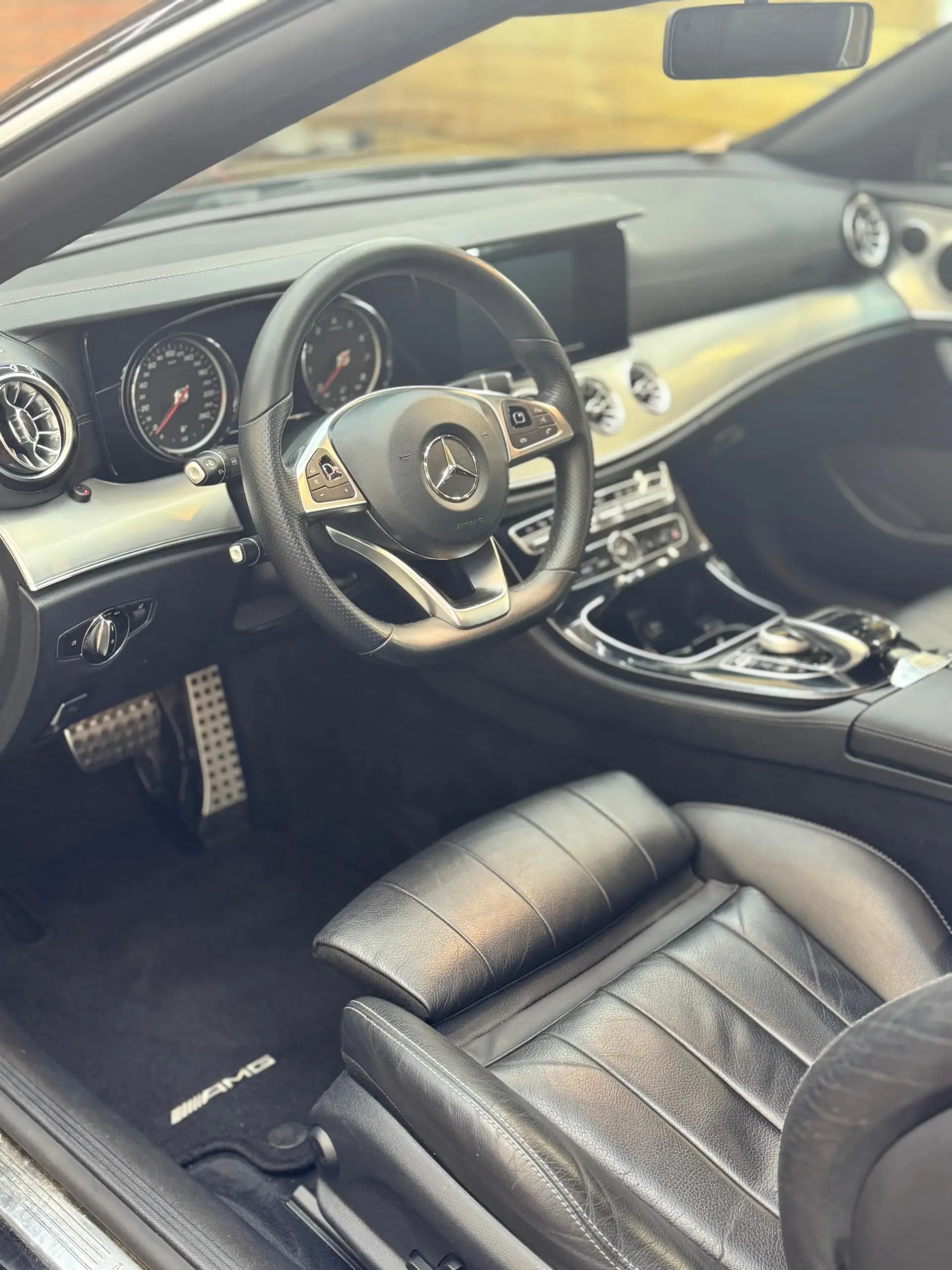
You can restore a leather steering wheel at home if you do the steps in the right order: clean, degrease, lightly abrade the surface, fill small cracks, colour in thin coats and finish with a top coat. A shiny, slippery or worn wheel can go back to a matte, even finish without a workshop. You do need patience, because every coat has to dry before the next one goes on.
The glossy, sticky or grey look on a wheel usually comes from skin oils, hand cream and sweat that have settled into the top layer. Underneath there is often still a sound finish, but it has worn through where you grip the wheel. A normal leather cleaner removes the dirt but does not bring the colour back. For that you need a colourant and a protective top coat.
Which kit suits the condition of your wheel
Look at the wheel in daylight first. Is the leather smooth or tacky, is it only the colour that has faded, or are there scratches and cracks too? The table below helps you choose.
Condition of the wheel | What you need | Why |
|---|---|---|
Black wheel, shiny and lightly worn | Cleans, degreases, restores colour and seals in one session, with abrasive pad and cloths included | |
Black wheel, heavily faded or dull | Preparer, alcohol cleaner, black colourant and top coat matched to each other | |
Scratches, cracks or small holes | 18 parts, including filler, colourant and top coat | |
Any colour other than black (201 Beige shown as an example) | Water-based colourant in 49 colours, including beige and brown; pick the shade that matches your wheel when ordering |
How to do it
If you can, keep the wheel out of direct sun and work in a dry garage. Tape off the steering column, the buttons and the seams towards the dashboard. Wear gloves, because the colourant is hard to wash off your hands.
Clean. Use a soft brush or sponge with a leather cleaner such as the Leather Expert Leather Cleaner in small circles and wipe away the dirty foam with a clean cloth. Tip: keep turning the wheel a little so you do not miss a section.
Degrease. The Leather Expert Leather Alcohol Cleaner removes the old protective layer and oily residue that colourant will not stick to. Let the wheel dry completely. Tip: never skip this step, most peeling repairs start here.
Key the surface. Use the Leather Expert Leather Abrasive Pad in circular movements to dull the top layer evenly. You are roughening the finish, not cutting into the leather.
Fill. Work scratches and cracks with Leather Expert Leather Filler Black and a spatula. Apply thin layers and let each one dry. Tip: the repair must be level before you colour, because colour does not hide a dent.
Colour. Apply the Leather Expert Leather Colourant with a sponge in thin coats. Expect 2 to 4 coats for full coverage, with 30 to 60 minutes of drying per coat. Tip: four thin coats beat two thick ones, the wheel stays supple and you avoid streaks.
Seal. Finish with a top coat. For extra durability, mix the Leather Expert Leather Cross Linker into the colourant (5 to 10 per cent of the volume) or apply it as a thin top layer over the cured colour. Tip: leave the wheel alone for at least 24 hours before you use it.
What is in the kits
The Colourlock kit is made for black wheels with wear, scratches and dulled leather. It includes a cleaner, a degreaser, Leather Fresh for the colour, the Elephant Leather Preserver, a sealant, an abrasive pad and cloths. If the leather is actually split, choose the Leather Expert Care & Repair Kit, which comes with filler and a spatula.
The Leather Expert Restoration Set Black has eight parts: a preparer, alcohol cleaner, black colourant, top coat, two sponges, an abrasive sponge and a polishing cloth.
Buying the products separately works too, for example when you need a colour other than black. For badly dried-out leather, the Leather Expert Leather Binder is a good first step: it bonds loose fibres together again before you fill and colour. Our guide to the Leather Expert black steering wheel restoration kit walks through the black set step by step.
Common mistakes
Coats of colourant that are too thick, which makes the wheel tacky or prone to cracking.
Skipping the degreasing step, so the colour lifts after a few weeks.
Using the wheel too soon. The colour is fully cured after 3 to 5 days, so be gentle with it in the meantime.
Treating a wheel made of several materials (leather, faux leather, plastic) in one go without masking.
Looking after the wheel afterwards
A restored wheel stays good if you clean it regularly with a mild cleaner and avoid all-purpose cleaners or wet wipes. How to look after leather in general is covered in our guide to cleaning, conditioning and repairing leather. To browse all leather kits and care products, go to the leather cleaning category.