
You remove dust nibs and runs from paint by first scraping or filing the raised spot flat, then sanding it fine and finally polishing it back to gloss. To level the spot, use a Mirka Shark Blade Scraper or a Mirka Mini Lacquer File. Only start once the paint has fully cured, because in soft paint you just make the problem bigger.
This is the approach for everyday workshop jobs: a speck of dust after spraying, a nib in a spot repair or a run on a panel. The principle is the same for each defect. You remove only the high spot, not the paint around it, and you work from coarse to fine and back to gloss.
Which tool suits which defect
Defect | Tool | Approach |
|---|---|---|
Dust inclusion or nib | Mirka Shark Blade Scraper | Shave the tip flat in one or two passes |
Paint run or sag | Mirka Shark Blade Scraper | Take it down layer by layer until almost flush |
Small nib near an edge or corner | Mirka Mini Lacquer File | File with light strokes until the spot is flat |
Nib in paint or coating | Slide it flat over the surface, practise on a small area first | |
Sanding marks after levelling | Wet sand with light pressure, stay around the spot | |
Fine sanding marks before polishing | Wet finish until the surface is evenly matt |
How to do it: removing dust nibs and runs from paint
Assess and let it cure. Look across the panel with a light at a low angle and do not tap the spot. If the paint is still soft, wait according to your paint supplier's processing data. Scrape too early and you smear the paint and end up with a bigger spot.
Clean the spot. Remove dust and grease so no grain rolls under your tool. A panel wipe such as Bilt Hamber Cleanser-Fluid works well here. Spray onto a cool, shaded panel and wipe dry with a clean microfibre cloth.
Scrape flat with the Shark Blade. Slide or push the blade over the nib or run, like a razor blade. Tip: work in short, light strokes and check after each one. Keep the blade flat, because a steep angle digs into the surrounding paint.
File fine in tight spots. If the nib sits against an edge or in a corner, the blade cannot reach everywhere. The Mini Lacquer File (20 x 42 mm according to Mirka) levels the spot in a controlled way. Pitfall: too much pressure. Let the file do the work and stroke lightly.
Wet sand with Abralon. Take a P2000 pad, the 34 mm size for small spots, and sand wet with light pressure until the shiny spot and its surroundings share the same matt finish. Then go finer with P3000. That grit order is common detailing practice, not a Mirka specification. Tip: keep the pad flat and stay in a small area, otherwise you sand through the clear coat.
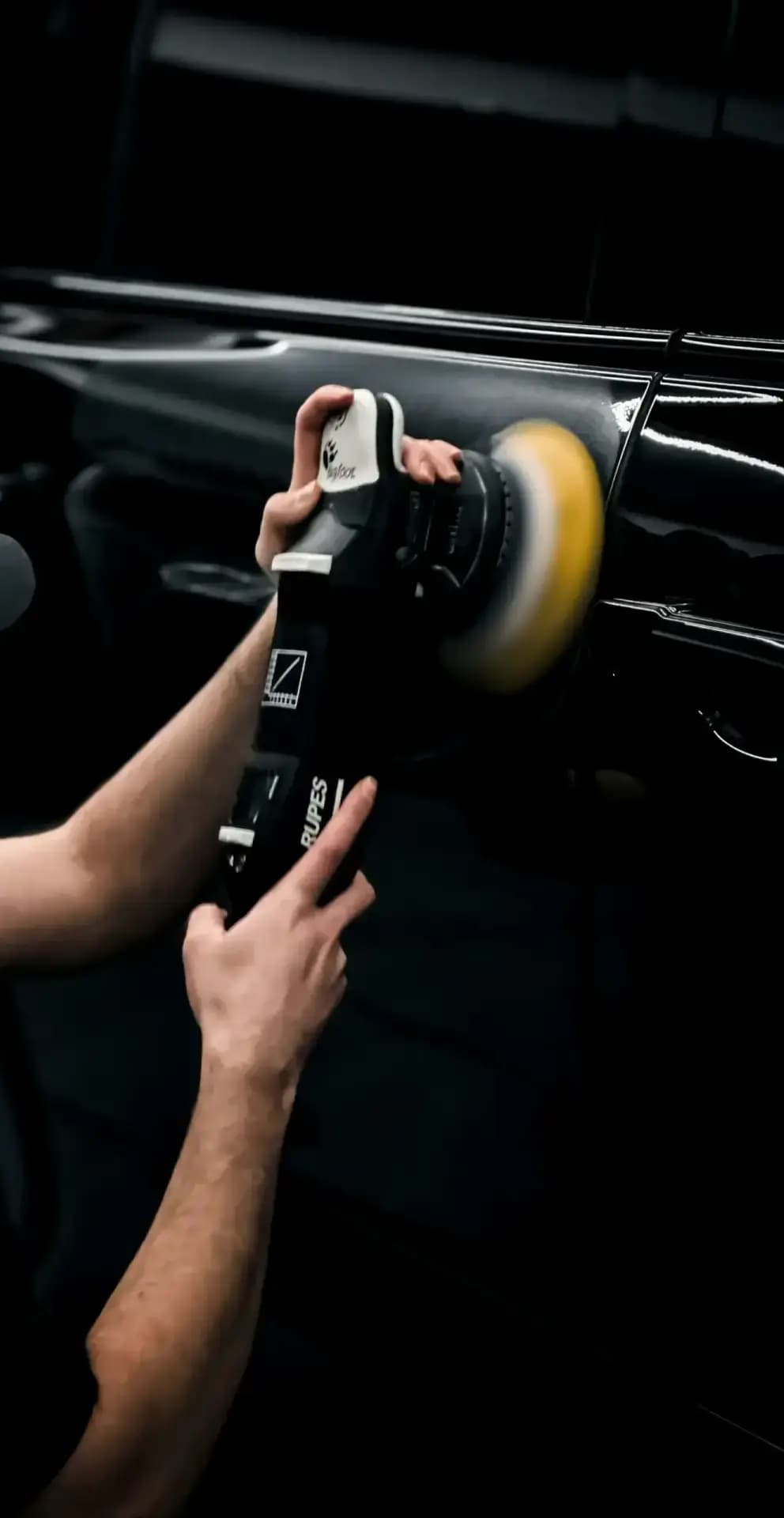
Polish back to gloss. Bring the matt-sanded spot back to gloss with a compound or polish on a foam pad. A good next step is Menzerna Medium Cut Polish 2500, followed by a finer finishing polish if needed. Check the result under a light and finish with wax or sealant.
Common mistakes when sanding out a paint run
Starting too early. Paint that has not cured gives way and leaves marks.
Pressing too hard with the file or pad. You then sand through the clear coat faster than you can see.
Sanding too wide. You remove the high spot, not a strip around it. The smaller the area, the less polishing you need.
Skipping a step. Going straight from the blade to polish leaves deep scratches. The P2000 and P3000 steps are there to remove them.
Polishing on a dirty pad. A loose grain makes new scratches, so working clean is half the job.
What you need and what to combine it with
For a complete set you end up with a scraper or file from the denib and finishing category, two fine Abralon pads and a polish. We wrote a separate guide on the polishing itself: polishing your car and removing swirls. If you work with a machine, also read using the Mirka Deros 650CV sander. Not sure which polish fits? Our overview of the best car polish helps.
For the wet step you need a bucket of clean water and a clean cloth. After each operation take a look under the light, so you can tell if the spot needs another round or is ready for polish.
From experience in the workshop: always practise a new tool on a scrap panel or an inconspicuous spot first. You feel the right angle and pressure after a few strokes, and then you go to the real panel with confidence.