
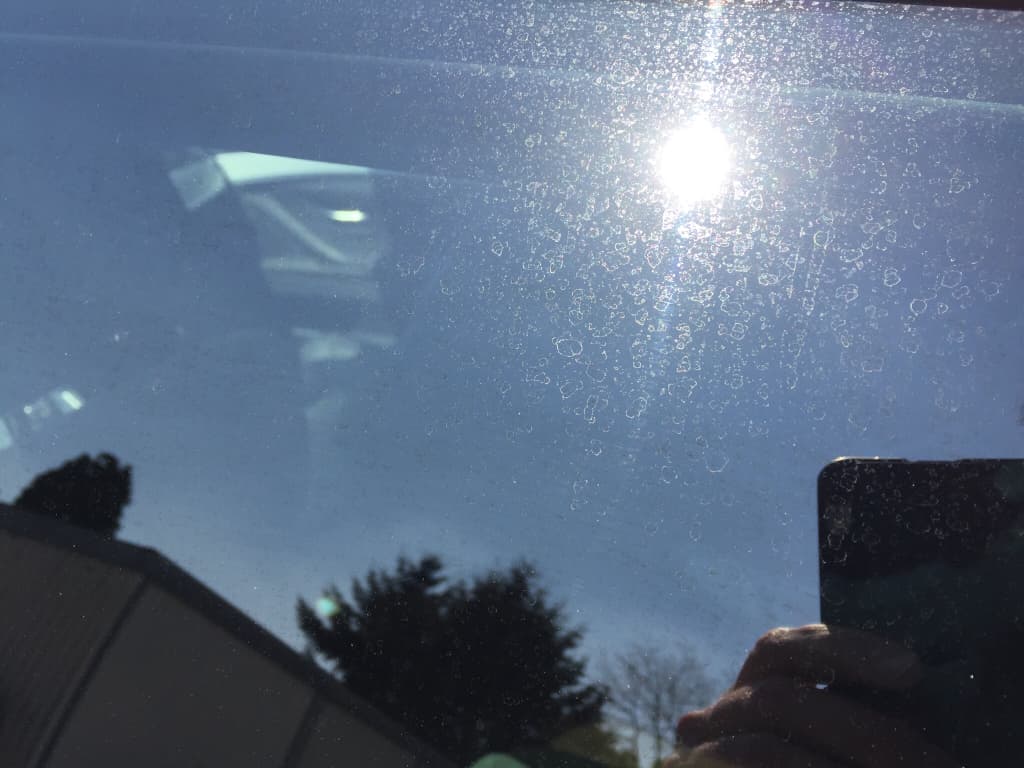
Water spots and limescale are the white rings left behind when mineral-rich water dries on your car. Dissolve them with a dedicated water spot or limescale remover or, on paint, with a clay bar, instead of scrubbing. If they are etched in, light polishing is needed. Always work in the shade on a cool surface and make a test spot first.
Why water spots form
Tap water, rain and garden sprinklers contain dissolved minerals, mainly calcium and magnesium. When a droplet dries in the sun, the water evaporates and the minerals stay behind as a white ring. At first they sit on top of the paint or glass and are easy to remove. Leave them too long or let them bake in the sun and they can etch into the clear coat or glass, and then polishing is needed.
How to use it
Wash the car and work in the shade on a cool surface. This stops a cleaner or remover from drying in too fast.
Treat surface limescale with a dedicated water spot or limescale remover. It dissolves the minerals chemically so you wipe them away instead of scrubbing. Keep the dwell time short, wipe with a soft microfiber cloth and rinse well. Test on an inconspicuous spot first.
Any spots still left on the paint? Clay the paint with a clay bar and plenty of lubricant to pull the embedded minerals off.
Are the spots etched in and will not come off? Then light polishing is needed. Only do that on glossy paint or suitable PPF, never on matte paint. On glass, use a glass polish made specifically for limescale on windows.
Water spots on the windows
A regular glass cleaner removes grease and dirt, but not dried limescale. For limescale on glass you need a glass limescale remover or a glass polish. For the daily cleaning afterwards a good glass cleaner works fine; for that, read the guide on cleaning glass without streaks.
Prevention beats removal
Dry the car after washing and do not let it dry in the sun, so the minerals get no chance to bake in. Wash in the shade. A layer of wax, sealant or ceramic coating makes the surface hydrophobic: water beads off and spots bond less easily. It also helps to keep your car out of range of a garden sprinkler.
Common mistakes
Using undiluted household vinegar or an aggressive acid on the paint. That can attack the paint, rubber and trim. Use a product made for car paint.
Scrubbing hard. You do not scrub limescale off, you dissolve it. Scrubbing only causes scratches.
Letting a remover dwell too long or working in the sun, so the product dries in.
Polishing matte paint to remove spots. That makes matte paint glossy and ruins the look.