
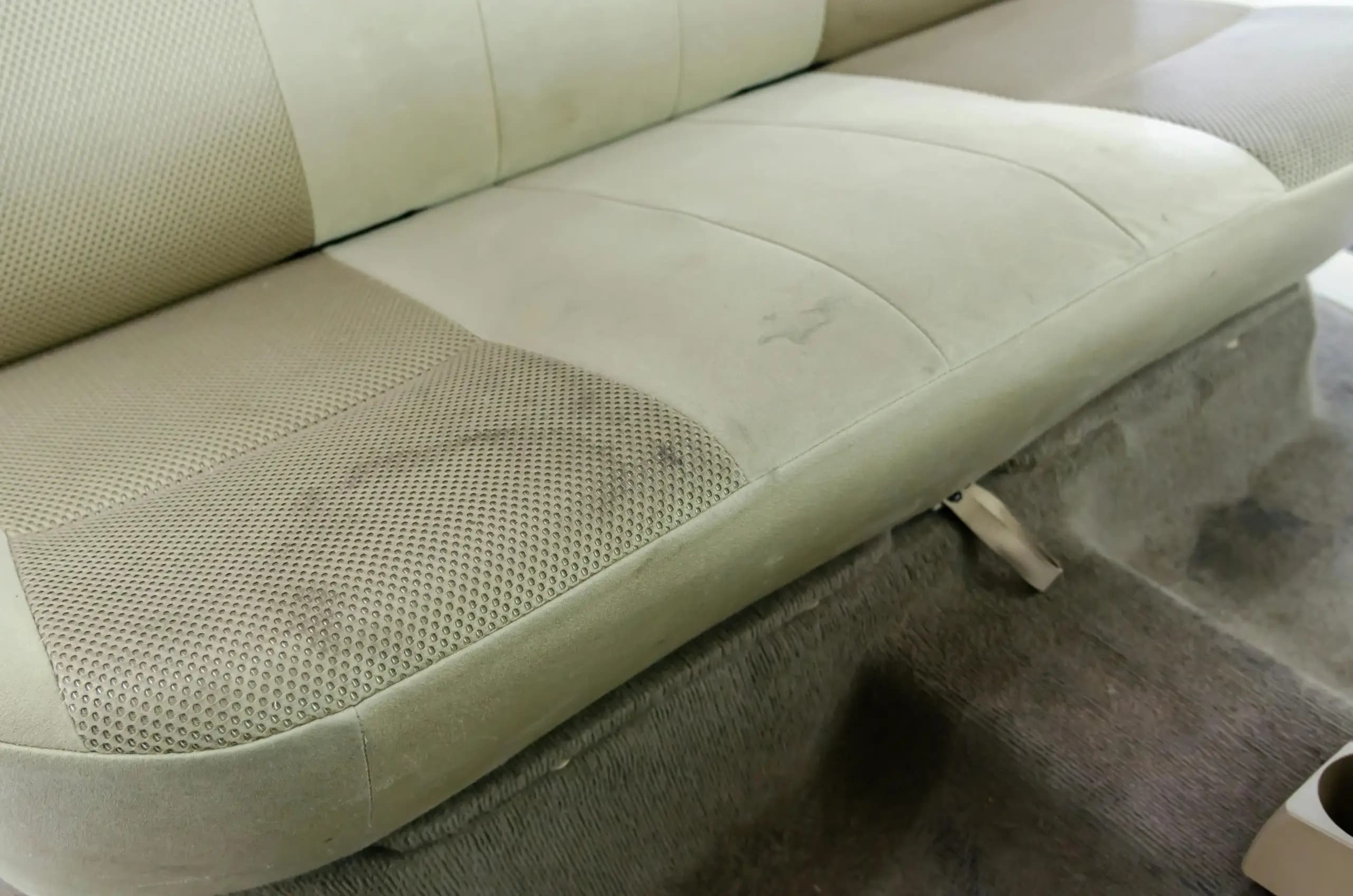
Cleaning car upholstery follows a fixed order: vacuum, pre-treat, agitate, extract and dry. That order gets most stains out of car seats without soaking the fabric. Too much moisture sinks into the foam under the cover and comes back up later as a ring, so work lightly and lift out as much as you can.
This guide covers fabric seats. If your seats are leather, read our guide to cleaning, conditioning and repairing leather. If you want to deal with the whole cabin, the rest of the routine is in cleaning your interior without damage.
What you need to clean fabric car seats
For an ordinary stain you need a vacuum with a crevice tool, a textile cleaner, a soft brush and clean microfibre cloths. We work with ProElite Textil Cleaner. It is a concentrated, low-foaming cleaner: you dilute it with water, 1:5 to 1:10 depending on how dirty the fabric is, and spray it onto the fabric. If you want new dirt to get less grip, ProElite Nanotextil fits well. It cleans, refreshes the colour and leaves an invisible protective layer (diluted 1:10). You will find more cleaners for stains and upholstery in the interior cleaners.
For a whole car, kids on the back seat or old dirt, an extractor pays off. The Tornador Rotador SprayVac Extractor sprays and sucks in one pass, so the upholstery stays less wet. A wet and dry vacuum such as the Flex VC 21 L MC picks up dry dirt and water. For seat seams, buttons and edges, use soft brushes, for example the D-CON All Details Interior Detailing Brushes.
Car seat stains: which approach fits
Type of stain | Approach | Watch out for |
|---|---|---|
Coffee, tea, soft drinks | Blot straight away, let diluted textile cleaner soak in, brush loose and extract | Do not rub, or you push the stain deeper into the fabric |
Grease, oil, make-up | Start with a solvent-based remover on a dry cloth, then textile cleaner | Test on a hidden spot for colourfastness |
Ink, pen, wax, paint | Dab with a dry cloth, working from the outside in | Never spray it straight onto the fabric |
Mud, sand, dust | Let it dry, vacuum thoroughly, then clean | Wiping it wet turns it into a layer of mud |
Water ring from an earlier clean | Lightly dampen the whole panel evenly and extract at once | Do not stop halfway across a panel, or a new ring appears |
How to do it
Vacuum. Vacuum the whole seat, including the seams and the edges against the plastic trim. Always do this first, because sand and crumbs turn to mud once cleaner touches them. Tip: hold a brush in your other hand and let it shake dirt loose from the stitching.
Test. Try the cleaner on a hidden spot, such as the underside of the seat or beneath the rear bench. Let it dry and check that the colour stays even.
Pre-treat. Spray the diluted textile cleaner thinly onto the stain itself, not over the whole seat, and let it work for a few minutes. Pitfall: saturating the fabric pushes the stain into the foam. For grease or ink, start with Koch Chemie FW Fleckenwasser on a dry, absorbent cloth, working from the outside in and without scrubbing hard. Use it only on solvent-resistant fabric and test first.
Agitate. Work with a soft brush in small circles. Hard scrubbing roughens the fibres and does not lift the stain any faster.
Extract. Blot with a clean, dry microfibre cloth or pull the dirt out with your extractor. Turn the cloth to a clean section regularly, otherwise you put dirt back. On an old stain, two light passes work better than one wet one.
Dry and protect. Let the seat dry with the doors or windows open and without hot air. Once the fabric is completely dry, Chemical Guys Fabric Guard helps keep new stains out: spray a thin layer, wipe it in one direction with a microfibre cloth and leave it to dry for twenty minutes.
Tips and common mistakes
Headlining and door cards must not get wet. Use a dry foam cleaner there, such as Shiny Garage Extra Dry Fabric Cleaning Shampoo, which you vacuum or wipe off once it has dried.
Test every cleaner for colourfastness first.
Do not rub a fresh stain, blot it. Rubbing drives the dirt deeper into the fibres.
For extra protection of fabric and convertible roofs there is also Koch Chemie Allround Textile Sealant, a protector for fabric and convertible roofs. According to the manufacturer the coating can take up to 24 hours to dry fully, and it should not go on displays. You will find more options under fabric and upholstery.
If a smell lingers after a spilled drink, cleaning is sometimes not enough. Read our article on ozone treatment for your car or have us do it with an ozone treatment.
Is the dashboard dusty too? See cleaning the dashboard and interior plastics.