
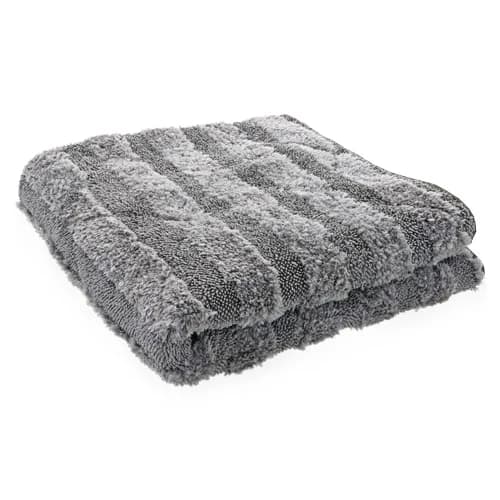
You use the Koch Chemie Pro Microfibre Towel 950 GSM 80x50 cm (the Koch Chemie Pro Drying Towel) to dry your paint after washing. Lay it flat on the panel, let it soak up the water and pull it towards you without pressure. The towel is extra heavy (950 GSM) and knitted from 70% polyester and 30% polyamide microfibre, with rounded corners. So you do not have to rub to get the panel dry.
In this guide you will find the key facts of this 950 GSM drying towel, how to use it step by step, the mistakes we see most often in the workshop and what to use before and after. Want to compare it with other towels? Have a look at the best car drying towel.
Key facts of the Pro Drying Towel 950 GSM
Feature | Value |
|---|---|
Size | 50 x 80 cm |
Weight | 950 g/m² (950 GSM) |
Material | 70% polyester and 30% polyamide microfibre |
Construction | Knitted |
Corners | Rounded |
Use | Drying paint after washing |
Washing | Follow the care instructions on the towel |
The 950 GSM figure tells you how heavy the fabric is per square metre. A heavier towel holds more water, so you wring it out or swap towels less often. You can read more about weight and colour in our guide to microfibre cloths, colour and GSM.
How to dry your car with the Koch Chemie drying towel
Read the care instructions. Koch Chemie asks you to follow the washing instructions on the towel. We wash a new towel first so loose fibres come out. Do not use fabric softener, it clogs the fibres.
Rinse the car thoroughly. Only start drying once all the shampoo is off the panel. Foam that stays behind dries into the towel and makes it dirty straight away. Tip: rinse from top to bottom and let the water sheet off the roof and bonnet.
Fold the towel. At 50 x 80 cm there is enough fabric to fold it in four, which gives you eight clean faces. Turn it over as soon as one face feels heavy and wet.
Lay it down and pull gently. Place the towel flat on the roof or bonnet, let it sink for a few seconds and pull it towards you without pressure. The towel takes in the water. Tip: start at the top and work down so the lowest areas come last.
Blot the details. For mirrors, grille and boot lip, blot with a folded corner. Water in seams and gaps tends to hang around, so come back to them later.
Check in the light. Walk around the car and look along the paint at an angle. If you still see droplets or a haze, follow up with a quick detailer such as the Koch Chemie Finisher JustPerfect Quick Detailer and wipe it off with a clean, dry cloth.
Common mistakes and tips
Rubbing hard. The towel does not need pressure to do its job. A gentle pull and a light blot are enough, and that is the safest approach for your paint.
Using a towel that has been on the floor. A single grain of sand in the fibres is enough to cause scratches. If the towel drops, grab another one or wash it first.
Fabric softener. Softener clogs the fibres and the towel absorbs worse afterwards. Wash it according to the care label, without fabric softener.
One towel for everything. Keep your drying towel for paint and do not use it on wheels, exhausts or the engine bay. For windows, use a separate cloth such as the Koch Chemie Pro Glass Towel X2.
Drying in the sun. Water then dries faster than you can wipe it and leaves water spots. Dry in the shade or let the car cool down first.
What to combine the drying towel with
A good drying towel is only one link in the chain. A low-scratch wash starts with the wash method, so also read how to wash your car without scratches. If you want to remove the bulk of the water with air first, drying with a blower means less towel work.
Want an even larger size? The Liquid Elements Orange Baby XL Microfibre Drying Towel 90x60cm dries a whole vehicle in one session.
Looking for a towel with silk edges and a slightly lower weight? Look at the D-CON Fast Mammoth Drying Towel.
You will find more cloths for wax, sealant and glass in the microfibre cloths category.
Curious how a heavier model compares? Read using the D-CON Thunder Grizzly drying towel.