
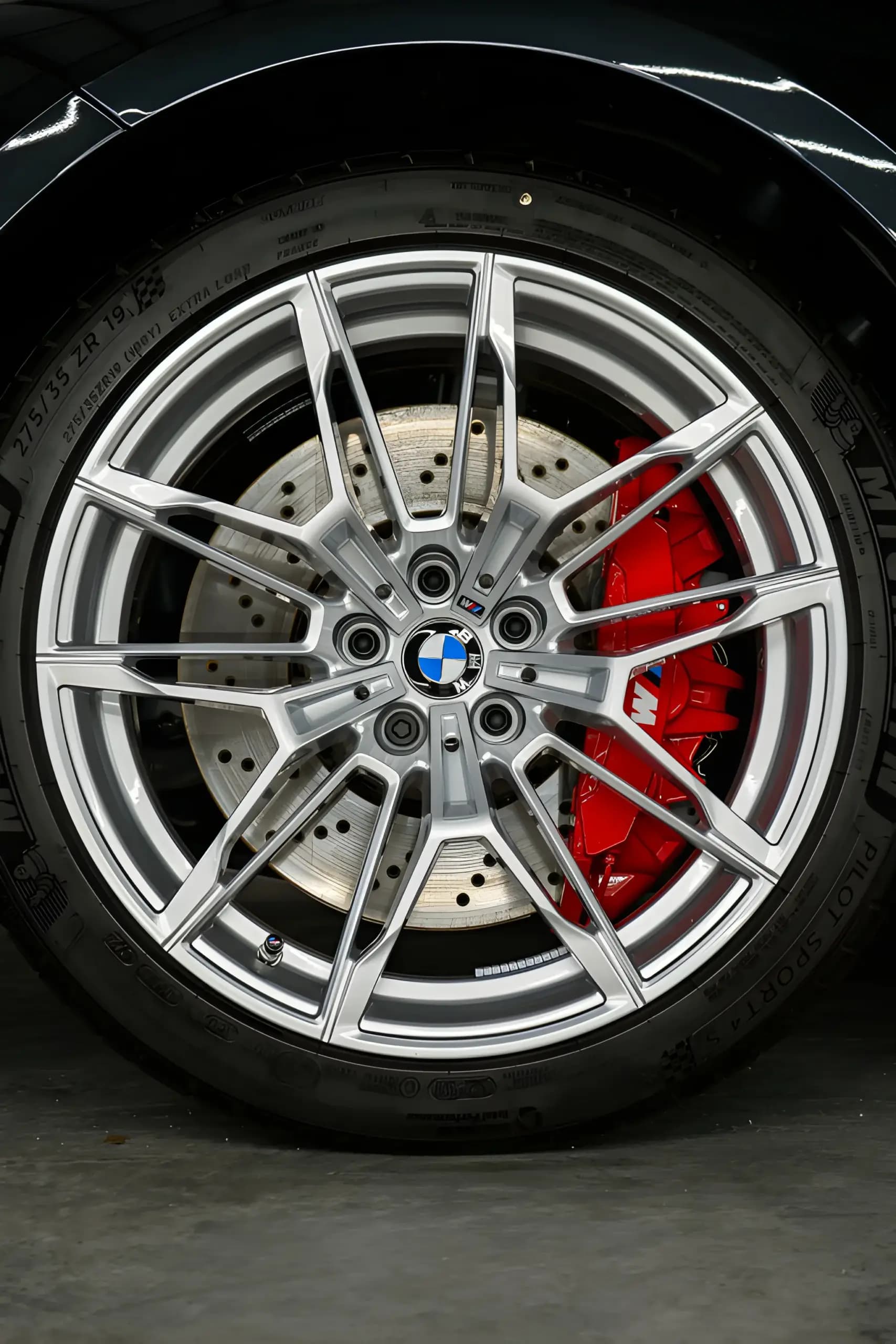
Wheels are often the dirtiest part of your car. Brake dust and embedded iron particles bond to the surface and shampoo alone will not remove them. At the same time, the wrong cleaner can actually cause damage. This guide explains which type of cleaner is safe and how to tackle your wheels without harming them.
Two types of wheel cleaner: acidic or acid-free
Acidic wheel cleaners work strongly and quickly, but they are risky. On painted, polished or coated wheels they can attack the surface if you leave them on too long or use them too often. They demand experience, protection and strict timing.
Acid-free, pH-neutral cleaners are a lot safer. They suit painted, chrome-plated and steel wheels, including coated ones, and many have a colour indicator that changes where the product reacts with iron and brake dust. For most people an acid-free cleaner is the sensible default.
A good example is the Koch Chemie MWC Magic Wheel Cleaner: acid-free, ready to use and with a colour indicator that shows where it reacts with iron and brake dust. Safe on painted, chrome-plated and steel wheels.
Have a look at our wheel cleaners if you want a safe choice.
Fallout: a separate step
If you still see small brown dots after cleaning, that is fallout: embedded iron particles from brakes and railways. You tackle those with a fallout remover. A de-ironizer reacts chemically with the iron and visibly turns purple where it works. Spray it on, let it dwell briefly and rinse thoroughly.
A popular choice is the D-CON V4 Wheel Cleaner & De-Ironizer, which tackles loose brake dust and embedded iron in one step.
How to clean your wheels step by step
Work on a cool wheel in the shade. On a hot wheel or in full sun the cleaner dries too quickly and can leave marks.
Rinse off the loose dirt with water first.
Spray the wheel cleaner evenly over the rim face and barrel.
Let the product dwell briefly per the label, but never let it dry in.
Go over the spokes and corners with a dedicated, soft wheel brush.
Rinse thoroughly, ideally with a pressure washer, and dry with a dedicated wheel towel.
Avoid cross-contamination
Keep your wheel kit strictly separate from your paint kit. Wheels are full of abrasive brake dust that causes scratches if it ends up on your paint. So use a dedicated bucket, brush and towel for the wheels. Our microfibre towel guide explains how to keep your towels apart with colour coding.