
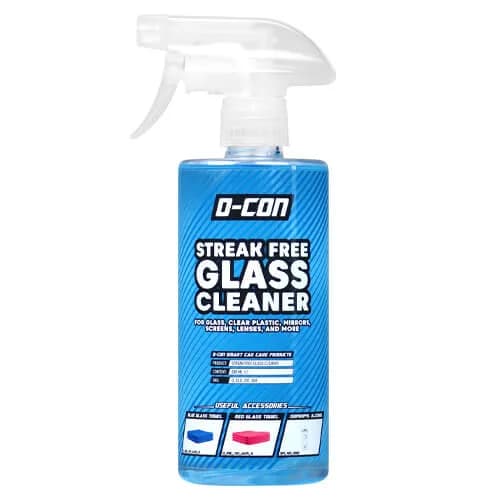
Streaks on car glass almost never come from the glass itself, but from leftover cleaner or a dirty cloth. With D-CON Streak Free and the two-towel method you clean windows, mirrors and screens streak-free: lift the dirt with a damp cloth, then buff dry with a clean cloth. This guide covers when to dilute and which mistakes cause streaks.
Why glass streaks
Glass looks flat but is full of microscopic texture where grease, road film and nicotine settle. A regular all-purpose cleaner does not dissolve that well and leaves a thin film that shows up as streaks in backlight. Streak Free uses a high concentration of active cleaners that break down grease and road film and flash off clean, without foam residue or white spots.
Diluting: when and how much
For normal weekly maintenance, dilute 1 part Streak Free with 3 parts water (1:3). For heavy grease, road film or a hazed-up dashboard, use it undiluted for more cleaning power. If there is limescale on the glass, treat that first with a clay bar or a dedicated limescale remover; baked-on tree sap you tackle with a clay bar or an APC. Otherwise the spots will remain.
How to use it
Work in the shade on cool glass. Never clean glass in direct sun or on warm glass. The cleaner dries too fast and that is exactly what causes streaks. Park in the shade and let the glass cool down first.
Spray the cloth, not the glass. Spray Streak Free onto your first microfiber cloth instead of straight onto the window. This prevents overspray on the dashboard and, on the inside, liquid running into the edges of screens and vents.
Lift the dirt with the damp cloth. Wipe the glass with the damp cloth in straight passes so you can see which part you have covered. The active cleaners release grease, fingerprints and road film. On the inside of the windscreen, use light pressure for stubborn haze.
Buff dry streak-free with the dry cloth. Immediately take a clean, dry microfiber cloth and buff the glass fully dry. This is the heart of the two-towel method: the damp cloth cleans, the dry cloth removes the last film and leaves the glass clear.
Common mistakes
Working in the sun or on warm glass, so the cleaner dries in and leaves streaks.
Using a dirty or linting cloth. Always use a clean microfiber cloth kept only for glass.
Spraying screens directly inside the car, letting liquid creep into the edges.
Trying to wipe off limescale or sap with glass cleaner alone. Treat limescale first with clay or a limescale remover and sap with clay or an APC.