
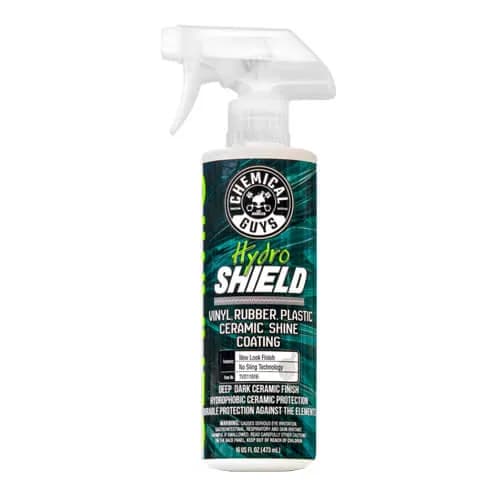
The Chemical Guys HydroShield Ceramic Trim & Vinyl Coating is a trim coating that brings faded, greyed parts back to a deep black and repels water and UV. Use it on bumper strips, sill trims, mirror caps, door handles and tyres. Clean, dry, a thin coat with an applicator and an immediate buff with a microfibre cloth: that is the whole routine for this plastic coating for your car. The protection lasts up to 12 months.
Chemical Guys HydroShield key facts
Property | What to know |
|---|---|
Content | 473 ml |
Suitable for | Rubber, plastic and vinyl |
Finish | Deep black, dry-feeling |
Protection | Up to 12 months against fading and weathering |
Use | Interior and exterior |
Formula | Hydrophobic SiO2, stick-on: stays put on parts that see friction, such as tyres |
HydroShield works differently from a normal dressing. A dressing sits on the material as a thin film of oil or silicone. This ceramic formula bonds to the surface, leaves a dry-feeling deep black layer and makes water bead off. That keeps trim black for longer and dirt has a harder time clinging to it. Want to understand how ceramic products work first? Read applying a ceramic coating yourself.
Which parts to use HydroShield on
Outside, use HydroShield on anything that is black plastic, rubber or vinyl and turns grey from sun and rain: bumper strips, sill trims, wheel arch edges, mirror caps, window rubbers and tyres. Inside it suits sills and door handles, where you want a deep black result. On tyres the stick-on formula does well, because the product has to cope with friction and movement there. If you are unsure about the result, try the coating on an inconspicuous spot first, so you can judge colour and gloss before you do the whole part.
How to apply HydroShield: plastic coating for your car in 6 steps
Clean the trim. Wash the part and degrease it where needed with a product from the degreasers category. Rinse everything off well. Old dressing or dirt under the coating causes patchy results. Tip: brush out seams and grain, because that is where most dirt hides.
Let it dry fully. Only apply to a dry surface. Water in seams and holes runs out later as droplets and marks the coating. Tip: blow seams dry or give them extra time.
Tape off. Mask paint, glass and wheels where the coating should not go. That keeps the treatment on the part you want to coat and leaves less to buff afterwards.
Shake and apply thinly. Shake the bottle well and spray a small amount onto an applicator, not straight onto the trim, for example the D-CON Mini Microfiber Coating Applicator. Work one part at a time in a single, even, thin coat. Tip: work in the shade on a part that is not warm.
Buff straight away. Wipe the part immediately with a clean, dry microfibre cloth so no residue or dark patches remain. Tip: fold the cloth and keep turning it to a dry section.
Let it cure and consider a second coat. Keep the part clean and dry for the first few hours. For more depth and longer protection, especially on tyres, apply a second coat the same way once the first has dried fully.
Common mistakes and tips
Applying too much. A thin coat is easier to buff off and gives a more even result than a wet one.
Starting on a greasy or wet surface. The coating only bonds well to clean, dry material.
Using the same applicator for coating and dressing. Keep a separate applicator for the coating so products do not mix.
Forgetting details. For emblems, seams and window rubbers, work more precisely with the Chemical Guys Detailing Swabs.
Spraying straight onto the part. Spray the product onto the applicator rather than the trim, which keeps the coat thin and under control.
What to combine with HydroShield
Clean and degrease the trim first, as in step 1. If you want a matte, factory-look finish inside the car, choose the Chemical Guys HydroInterior. A suitable applicator is in the applicators and foam pads category. Want black tyres that stay black? Read cleaning tyres and applying tyre dressing. For plastic you are not coating, see using Koch Chemie PSS Plast Star plastic dressing or the plastics and dashboard category. More ceramic products are listed under other coatings.