
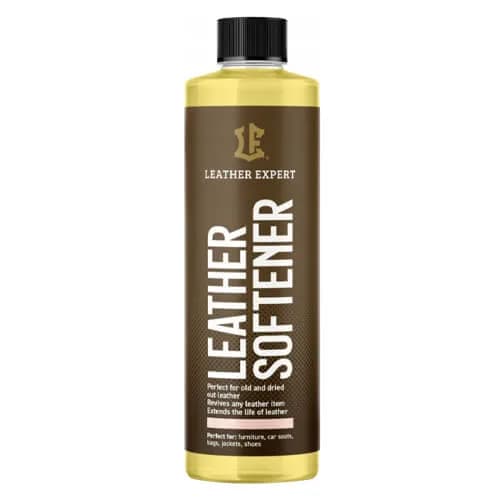
Leather Expert Leather Softener is made for dried, stiff or hardened leather. It makes old, stiff leather supple again and helps prevent further shrinkage. You clean the leather first to open the pores, massage the softener in thinly and build up several layers with rest in between if needed. You will find the Leather Expert Leather Softener in the shop.
Signs your leather needs a softener
The leather feels stiff and creaks when it bends.
Hairline cracks appear, especially on the sunny side.
A regular conditioner no longer soaks in well.
The leather went a long time without care, for example in a classic car.
Conditioner or softener
A softener and a conditioner complement each other: the softener restores suppleness, the conditioner then keeps it topped up. The table shows the difference.
Feature | Conditioner | Softener |
|---|---|---|
For | Maintaining healthy leather | Restoring stiff, dried-out leather |
When | Regular, at least 4x a year | Only on hardened leather |
Action | Feeds the surface | Penetrates deeper, makes fibres flexible |
Between layers | Not needed | About 12 hours |
How to use it
Clean first. Clean the leather so the pores are open and the softener can soak in.
Massage in thinly. Apply the softener with a sponge or cloth and gently massage it in.
Let it soak in. Give the leather rest; Leather Expert allows about twelve hours between two layers.
Repeat on very dry leather. If the leather still feels stiff, apply another thin layer.
Which leather it suits
The softener is for natural leather, from shoes and bags to car interiors and furniture. Do not use it on suede and nubuck. It restores suppleness but not cracks; for holes and tears you use a repair kit. Finish with a conditioner and read the whole picture in the guide cleaning, conditioning and repairing leather.